Load bars
Each bar has two load cells and a stated weighing capacity of up to 2 tonnes. They are described as resistant to water, weather and dust.
Measurement · Growth · Monitoring
Average daily gain helps you understand how an animal’s weight changes over time. With regular, comparable weigh-ins, you have a practical reference for monitoring your herd’s growth.
Understanding the measure
Average daily gain (ADG) describes an animal’s growth rate between two ages. It can be used to monitor the growth performance of one animal or a group.
First, subtract the starting weight from the weight at the end of the period. Then divide the result by the number of days. To compare results from one year to another, weigh animals at the same age.
For dairy herd monitoring, ADG 120 and ADG 210 refer to periods of up to 120 and 210 days respectively.
Growth factors
A dairy animal’s ADG is influenced, among other things, by the cow’s feeding during the final month of gestation and by the amount of milk given to the calf.
The original material gives a reference of 900 g/day for heifer growth, as well as 7–8 litres of whole milk per day from the end of the second week. It also mentions concentrate at the start of weaning, increasing from 500 g/day to 2 kg at around three months.
Weighing equipment
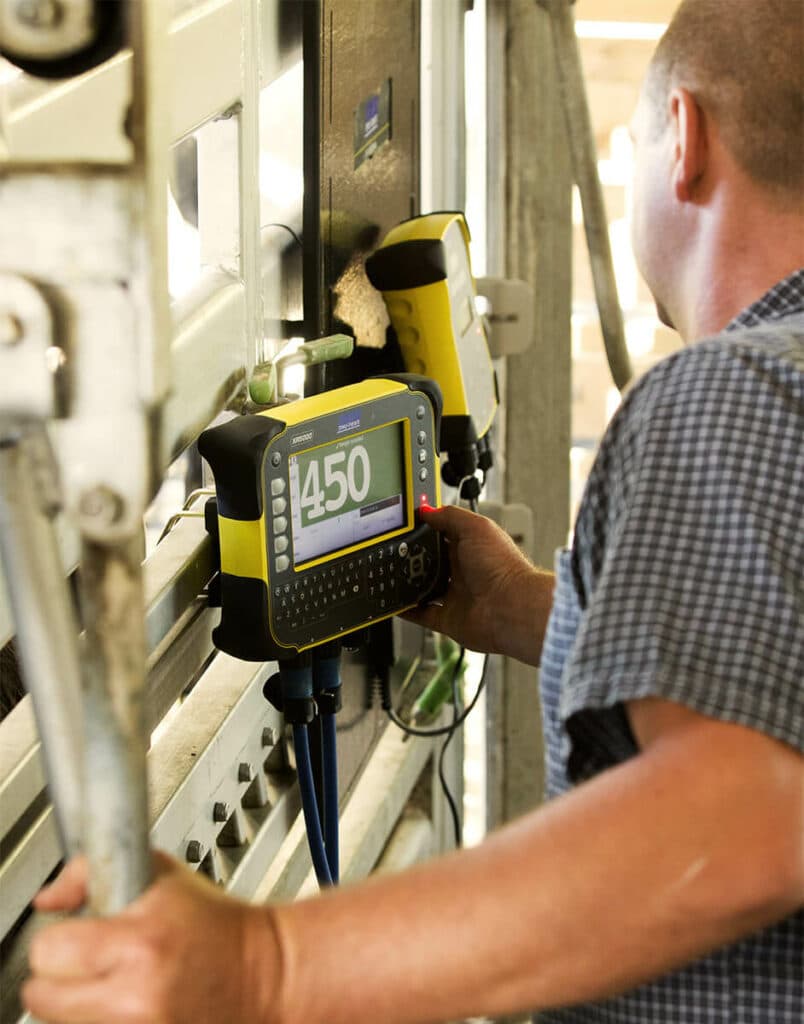
TRU-TEST load bars can be used temporarily or permanently. They are compatible with TRU-TEST or MARECHALLE indicators, designed to withstand animal movement and fitted with rubber feet for grip and shock protection.
Each bar has two load cells and a stated weighing capacity of up to 2 tonnes. They are described as resistant to water, weather and dust.
The indicator can record weights by Bluetooth in management software. The source page lists a 6-hour recharge time and 15 hours of operating time.